Every Child Learns Differently
Every Child Learns Differently is a thoughtful reflection on celebrating each child's unique way of learning, reminding us that confidence, curiosity, and growth flourish when children are supported as individuals.
EARLY CHILDHOOD
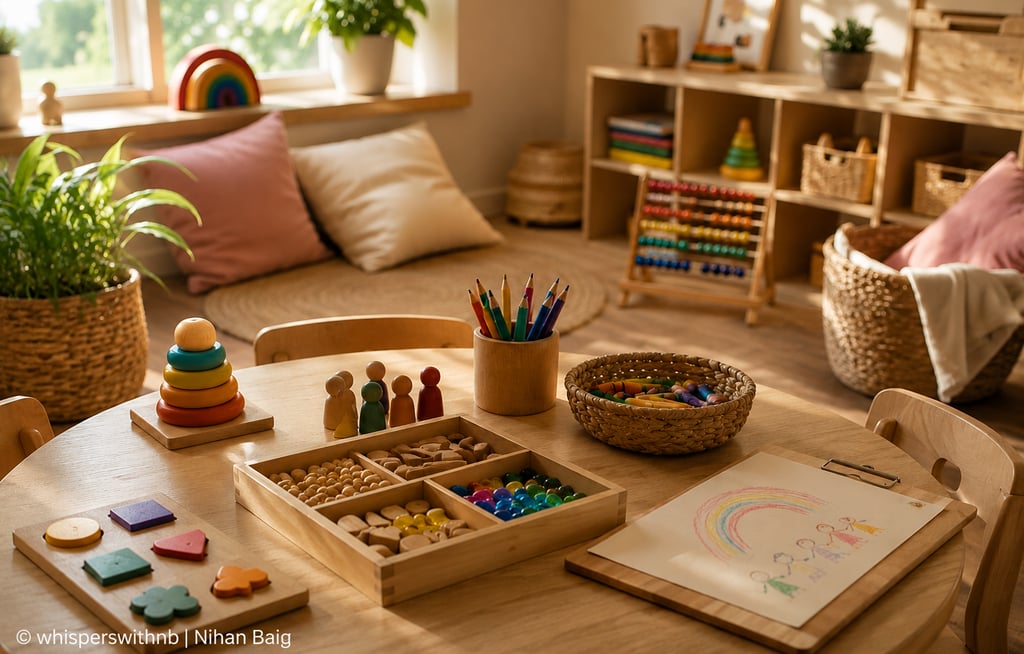
Step into any early childhood setting and you will quickly notice something remarkable. Although children may be the same age, no two learn in exactly the same way. One child eagerly explores through movement, another quietly observes before joining in, one loves asking endless questions, while another expresses ideas through drawing, building, or imaginative play. These differences are not signs that one child is ahead or another is behind. They are reminders that every child has their own unique way of discovering the world.
It can be tempting to compare children, especially when milestones are often discussed in terms of age and expectations. Parents may wonder why one child begins speaking earlier, another takes longer to learn to write their name, or a sibling seems to master certain skills more quickly. While developmental milestones provide helpful guidance, they are not a race. Growth is rarely identical because children are not identical.
Every child brings their own strengths, interests, personality, and experiences into the learning process. Some children learn best by listening, while others need to touch, build, move, or experiment before new ideas begin to make sense. Some enjoy solving problems independently, while others gain confidence through conversation and collaboration. When adults recognise these differences, learning becomes more meaningful because it begins with the child rather than expecting every child to fit the same path.
One of the greatest gifts we can give children is the freedom to learn at a pace that respects their individual journey. This does not mean lowering expectations. Instead, it means understanding that meaningful learning happens when children feel confident enough to explore, make mistakes, ask questions, and try again. Progress looks different for every learner, and every small step forward deserves to be celebrated.
Children also thrive when their natural interests are valued. A child fascinated by insects may spend hours observing tiny creatures in the garden, unknowingly developing scientific thinking, language, and problem-solving skills. Another who loves music may strengthen memory, listening, and creativity through songs and rhythm. A child who enjoys building towers is exploring balance, mathematics, persistence, and engineering concepts long before they encounter these subjects in a classroom. Learning becomes powerful when it grows from genuine curiosity.
As adults, it is easy to focus on what children cannot yet do. Yet when we begin by noticing what they can do, something changes. We see their strengths more clearly. Encouragement replaces comparison. Confidence begins to grow. Children who feel recognised for their abilities become more willing to tackle the areas they find challenging because they know they are valued for who they are, not only for what they achieve.
Supporting different learners also means creating environments where children feel safe to ask questions, make mistakes, and express themselves in their own ways. A child who feels rushed or constantly compared may begin to doubt their abilities. A child who feels accepted and encouraged develops the confidence to keep exploring, even when learning becomes difficult.
Perhaps one of the greatest responsibilities of parents and educators is not to shape every child into the same learner, but to help each child discover how they learn best. When we honour individuality, we nurture confidence, resilience, creativity, and a genuine love of learning that extends far beyond childhood.
Every child carries unique potential waiting to unfold. Some paths may appear faster, others slower, but each one has value. When we stop measuring children against one another and instead celebrate their individual journeys, we create space for every child to flourish in their own time, in their own way, and with the confidence to become exactly who they are meant to be.