Apologies Children Never Forget
Apologies Children Never Forget is a heartfelt reflection on how sincere apologies build trust, strengthen relationships, and teach children that love, respect, and accountability go hand in hand.
PARENTING
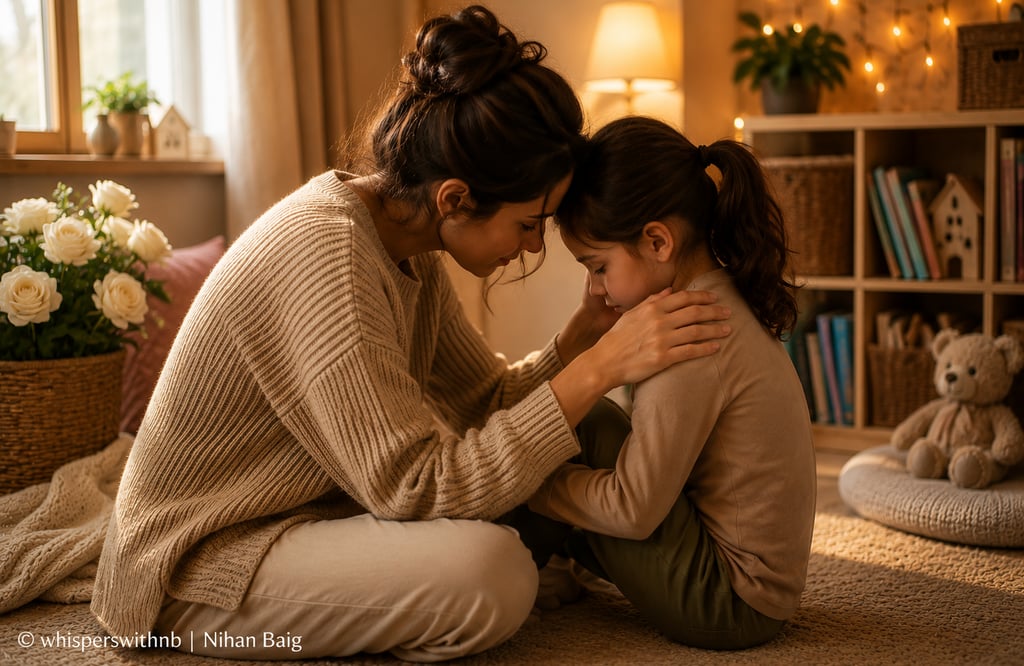

One of the greatest misconceptions about parenting is the belief that good parents never make mistakes. The truth is, every parent has moments they wish they could do differently. There are days when patience runs out, words come out more sharply than intended, or life's pressures become heavier than expected. Being human means we will sometimes fall short. What matters most is not the absence of mistakes, but how we choose to respond after them.
Many adults worry that apologising to a child will weaken their authority. In reality, the opposite is often true. A sincere apology shows children that respect is not determined by age or position. It teaches them that everyone, regardless of who they are, is responsible for the impact their actions have on others. This simple act quietly builds trust because children see that love includes accountability.
Children may not remember every disagreement or every difficult day, but they often remember how those moments ended. They remember whether someone came back to reconnect. They remember whether their feelings were acknowledged. They remember hearing words like, "I'm sorry I raised my voice," or, "I was frustrated, but I shouldn't have spoken to you that way." Those moments leave a lasting impression because they remind children that relationships can heal.
An apology does not erase what happened, but it creates an opportunity for repair. It tells a child, "You matter enough for me to recognise your feelings." It reminds them that mistakes do not have to define a relationship. Instead, they can become moments of learning, understanding, and deeper connection.
Perhaps one of the most valuable lessons children learn from our apologies is that making a mistake does not make someone a bad person. They see that people can take responsibility, make amends, and choose to do better next time. This understanding becomes incredibly important as they grow. Instead of fearing mistakes or hiding them, they begin to understand that honesty and humility are signs of strength.
Apologising also creates the kind of family environment where children feel safe to admit their own mistakes. When they have experienced grace, they are more likely to offer it to others. When they have been treated with respect, they learn to show respect in return. Children rarely learn accountability from punishment alone; they learn it by seeing it modelled every day.
Of course, a meaningful apology is more than saying the words "I'm sorry." It includes listening, acknowledging the child's experience, and making an effort to respond differently in the future. Children are remarkably perceptive. They notice when an apology is genuine, and they notice when behaviour begins to change. Consistent actions give those words lasting meaning.
There will never be a perfect parent, just as there will never be a perfect child. Families grow together through moments of joy, misunderstandings, forgiveness, and countless opportunities to reconnect. It is often these ordinary moments of repair that strengthen relationships the most.
Years from now, children may not remember every toy they received or every family outing they enjoyed. But they are likely to remember how it felt when an adult chose humility over pride, understanding over defensiveness, and connection over being right. Those are the apologies children never forget, not because they were perfect, but because they were sincere.
In the end, one heartfelt apology can teach a child more about love, respect, and responsibility than a hundred perfect words ever could. It reminds them that strong relationships are not built by never making mistakes. They are built by always being willing to come back, make things right, and choose love again.